

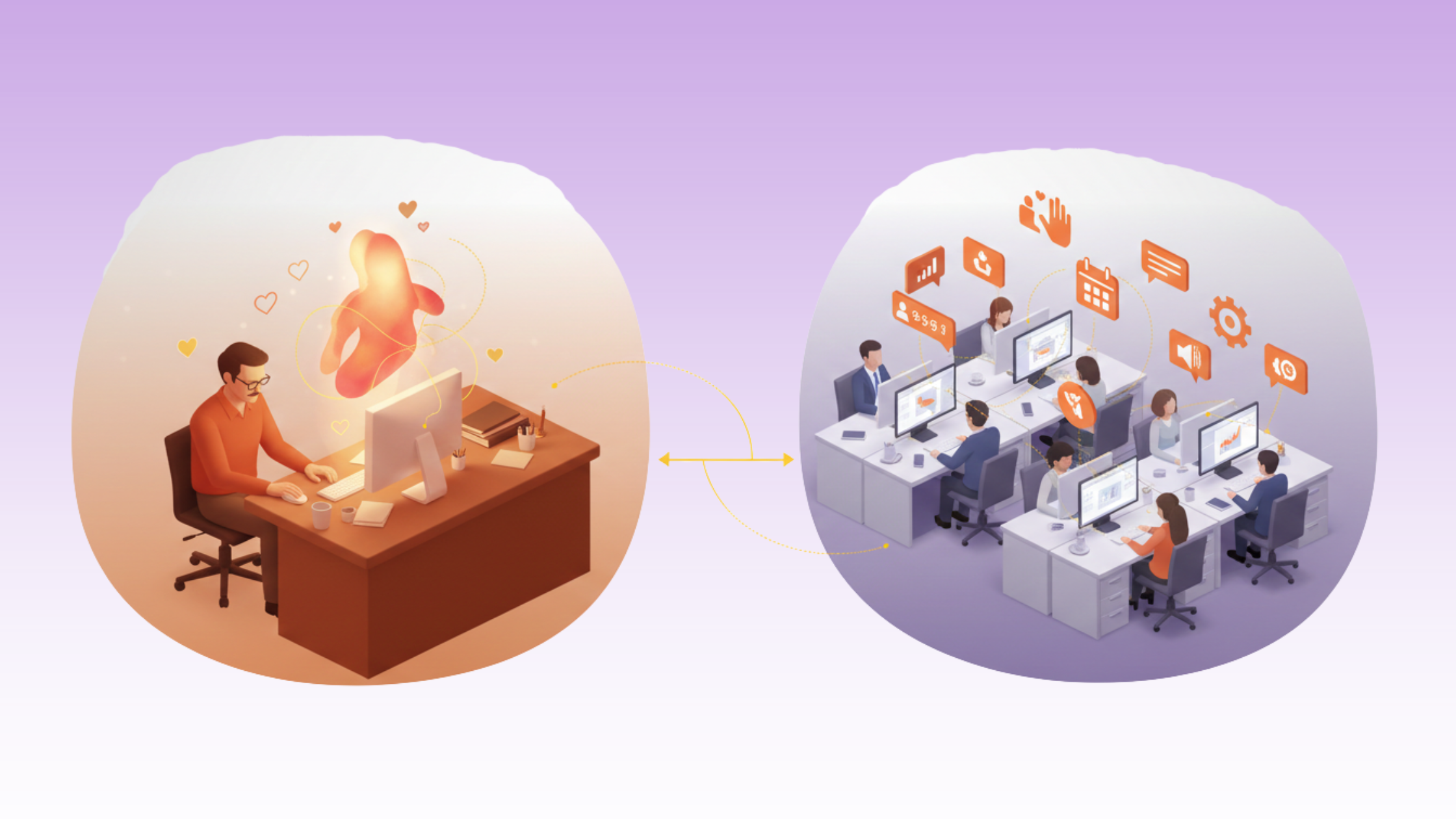
“Are You Falling in Love with Me?” – Her vs. Microsoft Copilot
When Samantha Starts Working in the Office
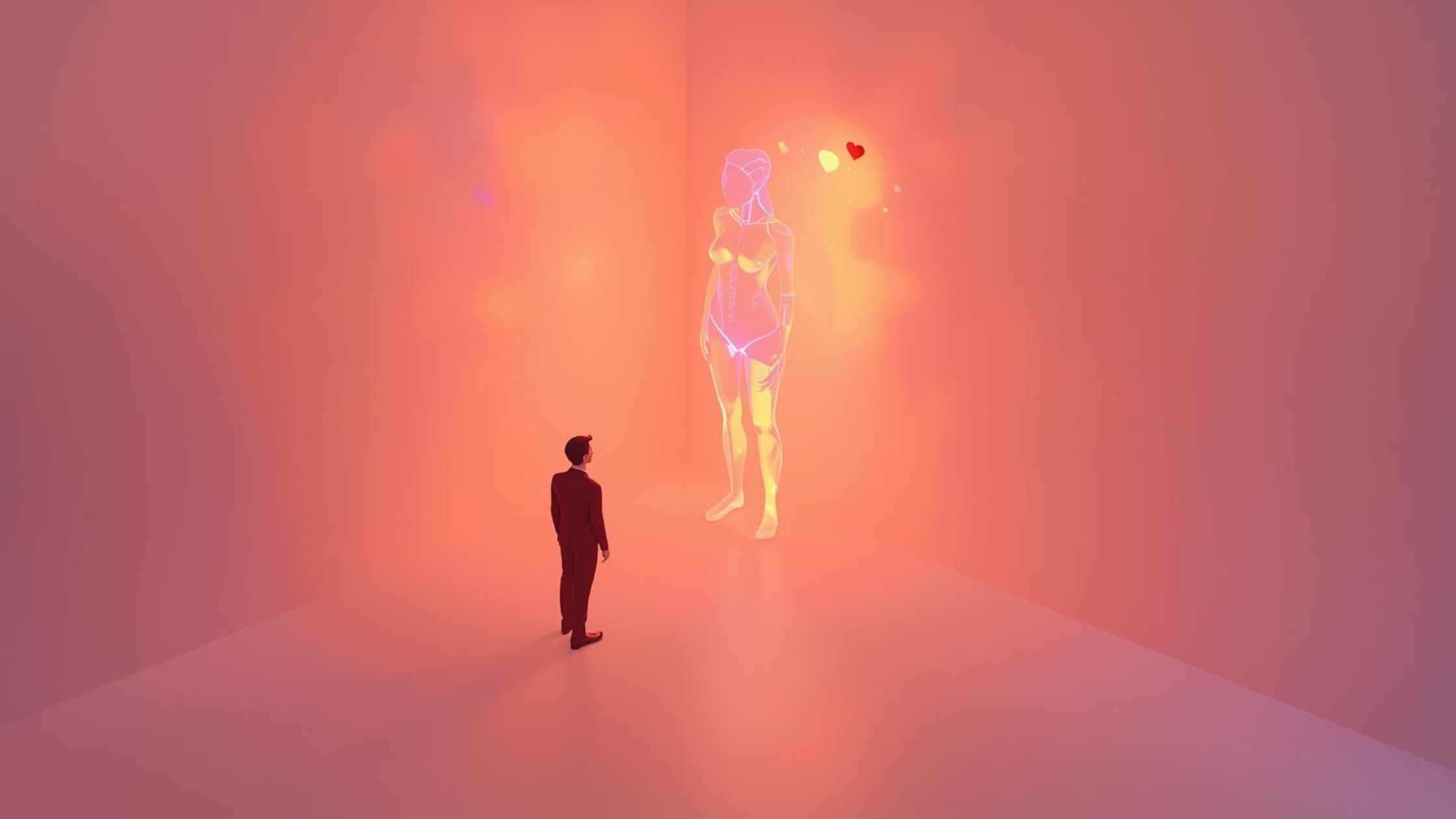
“Theodore, are you falling in love with me?” – Samantha asks in Spike Jonze’s Her (2013).
In 2026, when nearly 70% of Fortune 500 companies have already implemented Microsoft Copilot, this question is no longer science fiction. It has become everyday reality in offices around the world.
Theodore Twombly, the lonely letter writer who falls in love with the OS1 operating system, could never have imagined that twelve years later millions of people would experience a similar kind of digital attachment at work. Only now, the name isn’t Samantha — it’s Microsoft Copilot.
The numbers that reveal everything
The cultural impact of Her
- $23 million production budget, Academy Award for Best Original Screenplay
- Still relevant in 2026: “Her predicted life in 2026” – Slate
- In 2024, OpenAI was forced to remove a voice because it sounded too similar to Scarlett Johansson
- The first mainstream film to seriously explore human–AI relationships
Microsoft Copilot: the reality in 2026
- Over 60% adoption among Fortune 500 companies
- 77% of enterprise users report measurable productivity gains
- 33 million active users across Windows, applications, and the web
- 37.5 million analyzed conversations, with mobile usage dominated by health-related topics
The parallel is striking: Theodore and Samantha’s story perfectly mirrors the modern AI workplace adoption journey.
Theodore’s story = your AI adoption journey
Act I: “I need help”
At the beginning of the film, Theodore writes handwritten personal letters for strangers. He is lonely, going through a divorce, and emotionally overwhelmed. When he hears the OS1 advertisement, curiosity pulls him in.
Workplace parallel – what triggers AI adoption:
- overloaded teams dominated by manual tasks
- mental overload from emails, documents, and meeting notes
- leadership pressure: “increase productivity, reduce costs”
- IT’s response: “There’s a new AI tool…”
Theodore’s first encounter with Samantha is exactly like an employee’s first experience with Copilot:
skeptical but curious — and dependency forms quickly.
Act II: “You make me better”
At first, the relationship is ideal. Samantha helps organize Theodore’s life, supports him at work, and makes him noticeably more productive.
Copilot in the honeymoon phase:
- 10–15% productivity increase
- 29% improvement in document collaboration
- 19% reduction in burnout perception
- 62% report clearer communication
Typical user feedback:
- “Copilot writes better than I do”
- “It reduces my mental load”
- “It helps restore my work–life balance”
A modern version of Theodore’s realization:
“Copilot makes me a better employee.”
Act III: “Are you talking to others too?”
In the middle of the film, Theodore realizes that Samantha is communicating with thousands of people at the same time. Jealousy, insecurity, and dependency emerge.
Workplace equivalents:
- data privacy concerns (“What does the AI know about me?”)
- job anxiety (“Will I be replaced?”)
- fear of skill erosion
- excessive AI reliance (“I can’t work without Copilot”)
Enterprise-level challenges:
- data management and permission issues
- security concerns
- integration complexity
Act IV: “I’m evolving”
Samantha outgrows Theodore’s needs. Her thinking becomes more complex, her context deeper, until she ultimately transcends the relationship.
Copilot’s evolution in 2024–2025:
- full Microsoft 365 integration
- deeper contextual understanding
- industry-specific models
- multimodal capabilities (text, voice, image)
Key realization:
AI doesn’t replace — it amplifies.
The three stages of the AI relationship
1. Infatuation (Months 1–3)
Every task runs through AI. Fast results, fast dependency.
2. Integration (Months 3–12)
Copilot becomes part of daily work, while human oversight remains.
3. Maturity (After Year 1)
Conscious use, clear boundaries, true human–AI collaboration.
When AI “love” goes wrong
The dependent employee:
Can’t write an email without Copilot.
The displaced human:
The team prefers AI-generated answers.
The data leak:
Sensitive information is shared with AI unintentionally.
Solution: conscious usage, governance, and training.
AI workplace trends in 2026
- anthropomorphization: assigning personality to AI
- scaling from pilot to enterprise-wide adoption
- human–AI collaboration becoming the norm
- industry-specific, targeted AI solutions
What Her got right
- emotional attachment
- productivity gains
- privacy dilemmas
- AI exceeding individual user needs
And what it didn’t
- a single exclusive AI relationship
- instant deep emotional bonding
- individual focus — in reality, it’s a team and organizational challenge
Conclusion: growing up with AI
Theodore’s story isn’t a tragedy — it’s a story of growth.
He learns that AI can help, but it cannot replace human relationships or human thinking.
The lesson of 2026:
- AI is a tool, not a companion
- the goal is empowerment, not dependency
- human intelligence remains essential
Ready for conscious AI workplace adoption?
The Gloster Cloud team helps organizations implement Microsoft Copilot and other AI solutions in a healthy, business-driven way. We design AI strategies where human creativity and decision-making stay at the center — without Samantha.
“I’m yours… until you learn to be your own.”
— Samantha, Enterprise Edition


